Priors Court
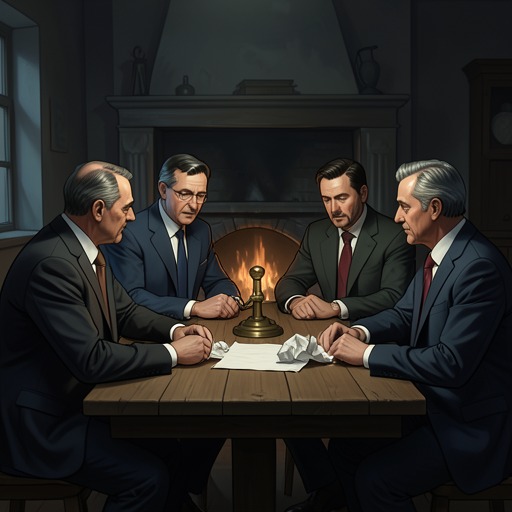
The Pale HorsePriors Court is the country house of Mr Venables, a restored former ruin whose fine collections and hospitable owner make it a memorable local landmark. It also becomes a focus of suspicion after Zachariah Osborne identifies Venables as a man he saw near Father Gorman on the night of the murder. The house’s importance lies not in being shown as a crime scene, but in how its proximity to the Pale Horse and its owner’s circumstances complicate that identification.
Setting and restoration
Rhoda describes Priors Court as only a few miles away and says that Venables bought it about three years earlier. Before his purchase, the house was an absolute ruin, falling to pieces; he had since restored it at considerable expense. The contrast between its former condition and its renewed, richly furnished state establishes both the scale of the undertaking and the resources available to its owner.
The house is situated at Much Deeping, where Osborne later identifies Venables as a local resident. Its setting connects an apparently private country estate to the wider mystery: the house is close enough to the Pale Horse to make its owner’s movements and associations seem relevant, but that geographic fact alone does not establish any connection to the murders.
The house and its collections
Venables welcomes Rhoda and her party to lunch, wheeling himself along the hall to meet them. After the meal, he takes his guests on a tour, displaying his possessions with evident pleasure. The visit gives Priors Court the character of a treasure house rather than simply a residence: Mark Easterbrook recalls its jades and African sculpture, as well as its Meissen and Bow porcelain.
These collections shape the guests’ impression of Venables. After leaving, Mark remarks on the apparent scale of his wealth, while Rhoda has already described him as a man of considerable means whose principal interest is nowadays the sale rooms. The evidence presents the house through hospitality and objects: its owner’s interest in collecting is visible in the tour, and the richness of the interiors makes his resources conspicuous without itself implying wrongdoing.
Venables and his visitors
Rhoda explains that Venables had polio and was semi-crippled, so he had to use a wheelchair. She also says that he had once been a great traveller, making his present limited mobility a contrast with his earlier life. When Mark visits Priors Court again, he approaches by a quarter-mile winding drive. A manservant receives him in the hall and checks whether Venables is well enough to see visitors; Venables then welcomes him warmly, wheeling forward and greeting him as an old friend.
That later visit renews Mark’s attention to the house and its owner. Mark has felt that Venables is a clever, potentially dangerous organizer, but he also recognizes a decisive difficulty: Osborne’s account places Venables walking in London, whereas the man Mark knows uses a wheelchair. Mark therefore regards the identification as worthless and Venables’s residence near the Pale Horse as insufficient evidence. The cordial welcome at Priors Court does not resolve the question; it provides a fresh encounter with the person whose identity is disputed.
The identification and the house’s narrative role
Osborne’s identification originates in a sighting near the time of Father Gorman’s murder. In a letter, he reports seeing the man he had described as passing his shop on the night Father Gorman was killed. At a church fête about twenty miles from where Osborne was writing, he recognizes that man again, now propelling himself in a wheelchair. Discreet inquiries lead him to the name Venables and to Priors Court in Much Deeping. Osborne assumes Venables must have had an accident, not knowing from this account that Rhoda attributes his disability to polio.
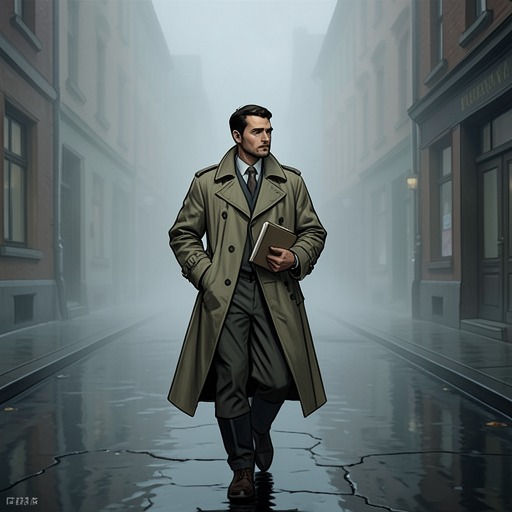
Osborne later insists that he was not mistaken, despite the fog and the distance involved. He says his confidence rests not only on facial features but also on the carriage of the head and the angle of the neck on the shoulders; he has, he claims, studied recognition. The police regard the identification as impossible, and Mark’s understanding of Venables’s paralysis initially supports that objection. Priors Court consequently anchors a conflict between Osborne’s sustained certainty and the physical circumstances that make the sighting appear implausible. The narrative ultimately establishes that Venables is unrelated to the Pale Horse murder organization: the imposing house and its owner help direct suspicion, but neither proximity nor confident recognition amounts to proof.